Tell Us What You Need →
Home›Produce›Fruits›Guava

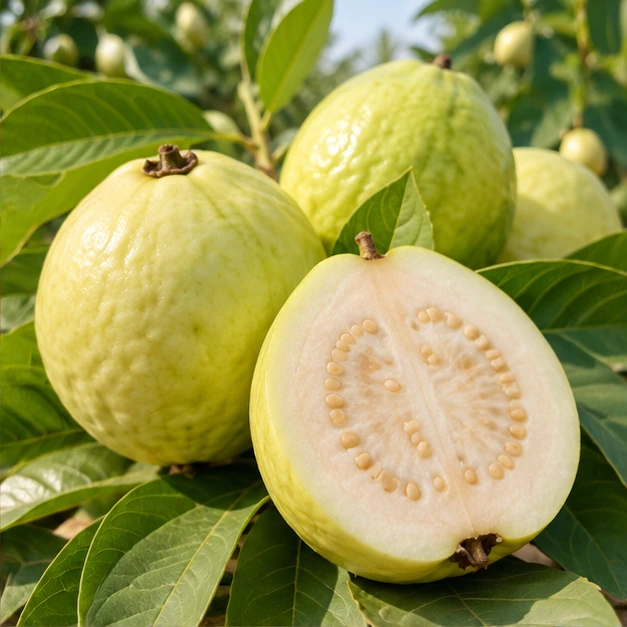
Egyptian Guava

Fragrant Egyptian guava for specialist fresh produce markets.

Guava is widely recognised in Egypt and can suit specialist wholesale, retail and ethnic-market demand.

Commercial sourcing Season-led programmes Local supplier network Buyer-led specification
Fresh Egyptian Guava

Typical Egyptian Season

Jan
Feb
Mar
Apr
May
Jun
Jul
Aug
Sep
Oct
Nov
Dec
Typical availabilityOutside main window

Indicative availability: August – April. Harvest and export windows can move slightly according to crop year, growing region, variety, buyer specification and destination market.

About Egyptian Guava

The fruit is aromatic and relatively delicate, so maturity, variety, handling and intended transit time matter when assessing export suitability.

We recommend that commercial buyers provide the destination, expected volume and required arrival condition so the sourcing route can be assessed realistically.

  • Distinctive aroma and eating profile
  • Specialist market opportunity
  • Maturity and handling are important
  • Availability varies by variety and supplier
OriginEgypt; exact growing region varies by crop, variety and current programme.
Commercial basisAssessed against specification, volume, destination, compliance and timing.
Typical seasonAugust – April, subject to crop-year confirmation.
Egyptian agricultural production landscape

Egyptian Produce Sourcing

Commercial guide to Egyptian Guava

Useful context for importers, wholesalers, distributors, retailers, foodservice buyers and other organisations assessing guava from Egypt.

Commercial context

Egyptian guava is a distinctive aromatic fruit with strong demand in regional, specialist and ethnic food markets. Compared with major export commodities such as oranges or potatoes, guava is often a more niche sourcing line and can require careful matching between variety, maturity and destination. The fruit’s fragrance and flavour are major selling points, but softness and rapid ripening can make handling challenging. Buyers therefore need to consider how the fruit will be marketed and how quickly it can move through the supply chain after arrival.

What buyers should define

A guava brief may need to cover fruit size, colour, firmness, maturity, skin condition, variety, seed characteristics and packing. Some markets prefer fruit that arrives relatively firm and ripens after distribution, while others want a more advanced eating stage. Those expectations have a direct impact on harvest timing. Transit duration and temperature management should be discussed early because guava can soften quickly. Packaging also needs to protect the fruit from pressure and abrasion while allowing practical handling through wholesale or retail channels.

Season and programme planning

Guava availability in Egypt can extend across more than one part of the year depending on growing area and crop cycle, but commercial export opportunities should always be confirmed against the live season. The fruit’s ripening behaviour means that timing is not just about whether guava exists at origin; it is about whether fruit can be selected at the right maturity for the journey and destination customer. Programmes to distant markets therefore need more conservative planning than short-haul regional trade.

How Midori Agriculture can support

Midori Agriculture can help specialist buyers assess whether Egyptian guava is commercially suitable for their market and route. We can discuss maturity, pack style, target arrival condition and expected volumes with relevant local suppliers, and help distinguish between fruit that may look acceptable at origin and fruit genuinely suited to the planned transit. For buyers new to Egyptian guava, this local communication can be particularly valuable because maturity terminology and market expectations are not always expressed in the same way by every supplier.

Quality & Specification

Commercial fresh produce is specification-led. We start with the buyer’s market and intended use, then assess suppliers against the characteristics that matter for that programme.

  • Variety, type, maturity and intended use
  • Grade, sizing, appearance and defect tolerances
  • Residue, traceability and destination-market requirements
  • Certification and audit requirements where needed
  • Packing, labelling, palletisation and private-label requirements
  • Arrival condition, shelf-life expectations and delivery programme

Sourcing Through Midori Agriculture

We can assess suitable suppliers and logistics feasibility for the intended destination and programme.

We translate the commercial requirement into a clear sourcing brief, identify relevant Egyptian supply options and help coordinate discussions, samples, specifications, commercial terms and follow-up.

  • Requirement-led supplier identification
  • Local communication and commercial follow-up
  • Specification and packing coordination
  • Support for trial, seasonal and recurring programmes

Looking for Egyptian Guava?

Tell us your quantity, destination, timing and specification and we’ll assess suitable sourcing routes.

Enquire Now →

Who We Supply

Specialist fruit importers, ethnic wholesalers, retail suppliers and foodservice buyers.

Export & Logistics Support

Depending on the engagement, support can include packhouse liaison, specification communication, documentation coordination, shipment planning and delivery follow-up.

Quality & Compliance

Supplier selection can take account of quality, traceability, certification and destination-market requirements. Capabilities are confirmed for the specific supplier and programme.

Commercial Buyer Guide

What to consider when sourcing Guava

Practical points to help commercial buyers define a stronger brief before quotations and supplier discussions begin.

Commercial fit

Guava can serve specialist wholesale, ethnic retail, foodservice and selected mainstream fruit programmes. Because varieties and maturity stages differ, the desired eating profile and transit requirement should be explained clearly before a supplier is selected.

Specification focus

Commercial criteria can include variety, fruit size, skin colour, firmness, maturity, surface condition, aroma development, permitted defects and packaging. A buyer expecting firm fruit for onward distribution may require a different harvest stage from a programme intended for rapid local sale.

Handling & arrival quality

Guava can soften and develop aroma quickly as it ripens, making maturity control and transit planning important. The supplier should understand the expected journey and arrival stage so harvesting and packing decisions support the buyer’s distribution model.

Programme planning

For a new market or customer, a controlled trial can help establish the right maturity and packaging specification before larger recurring volumes are committed.

Buying Guava from Egypt

Guava from Egypt can form part of seasonal or programmed fresh-produce supply for importers, wholesalers, distributors and other commercial buyers. Midori Agriculture supports enquiries by combining the buyer’s requirement with local market knowledge, supplier relationships and practical coordination in Egypt.

Egyptian guava is a fragrant tropical-subtropical fruit with strong regional demand and selective export potential. The fruit can be attractive to ethnic, wholesale and specialist retail markets, but maturity and handling require care because guava can soften quickly and develop bruising if it is packed too ripe or handled roughly.

Buyers should define preferred variety or flesh type where relevant, fruit size, maturity, colour, firmness, defect tolerance and packing. The ideal maturity at harvest depends heavily on transit time and the intended customer. A programme designed for short-haul regional delivery can therefore differ from one intended for a longer European route.

Midori Agriculture can assess Egyptian guava availability for buyers that understand the product’s shelf-life characteristics and need a commercially realistic supply route. We can help coordinate maturity expectations and packing discussions so the sourcing decision reflects the destination journey.

Midori Agriculture does not treat produce as a fixed retail catalogue. Availability, grade, variety, packing capability and commercial terms are assessed against the buyer’s live requirement and current crop conditions.

Planning around the Egyptian season

The month-by-month calendar is a planning guide rather than a contractual promise. Harvest and export windows move with weather, growing region, variety, crop development, storage capability, market access and destination specifications. Current availability is reconfirmed before commercial commitment.

Frequently asked questions

Can you assess a one-off shipment?

Yes. Trial, one-off and recurring requirements can be assessed where volume, destination and specification are commercially viable.

Can you work to an existing specification?

Yes. Upload a specification, tender or product sheet with the enquiry so grade, packing, certification and destination requirements can be incorporated from the outset.

Do you only source products listed here?

No. The catalogue focuses on important Egyptian crops. Other agricultural requirements can also be submitted for assessment.

Are the seasonal months guaranteed?

No. They are indicative planning windows and are reconfirmed for the crop year, supplier, destination and requested programme.