
Egypt Agriculture
Why International Buyers Source Fresh Produce from Egypt
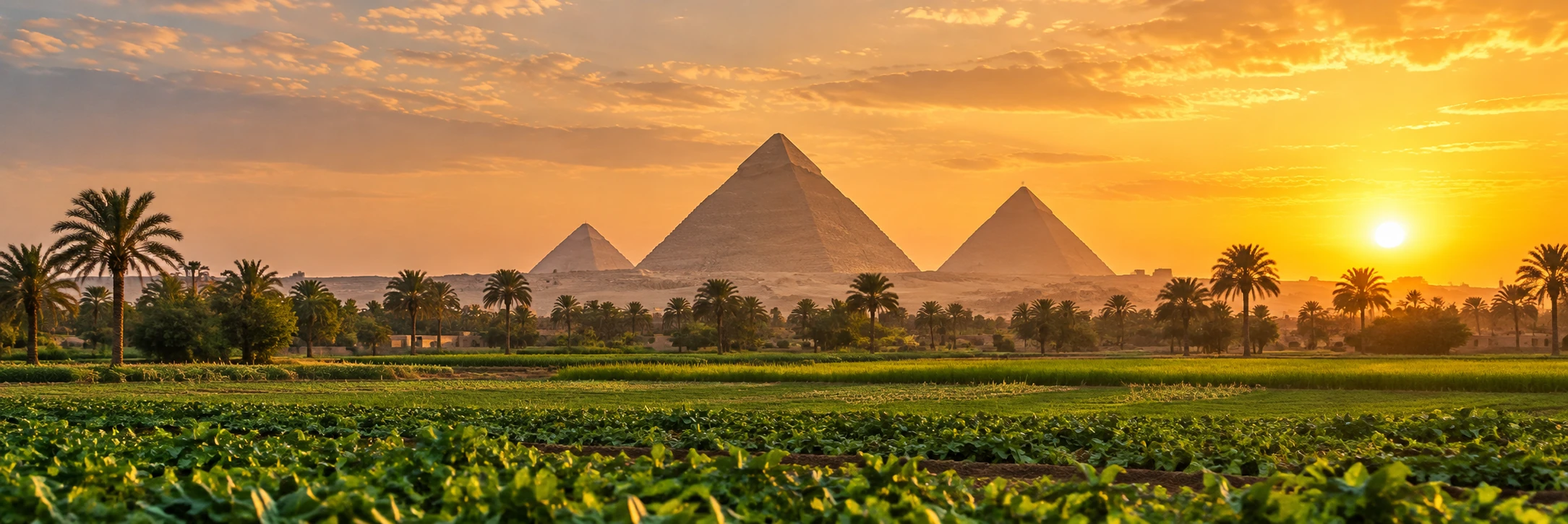
Egypt combines large-scale agricultural production, established export crops and a geographic position close to Europe, the Middle East and Africa. Those advantages create real sourcing opportunities, but origin alone does not guarantee that a programme will be right for a particular buyer.
Last reviewed: 14 October 2026. Commercial and regulatory information should be checked against current requirements before shipment.
A broad crop base
Egypt exports significant volumes of citrus, potatoes, sweet potatoes, onions, grapes, strawberries, garlic and other fresh produce. This breadth allows buyers to consider Egypt across several categories rather than only one seasonal line.
Useful seasonal positioning
Egypt’s climate can create windows that complement other origins. Winter citrus and strawberries, spring potatoes, summer grapes and autumn pomegranates are examples of how an Egyptian programme can fit into a wider procurement calendar.
Established export infrastructure
Export agriculture involves farms, packhouses, cold stores, inspection, laboratories, freight and plant-health authorities. Egypt has a substantial established ecosystem around its major export crops.
The capability still varies by supplier, so buyers should assess the specific route they intend to use.
Geography can support competitive transit options
Proximity to Mediterranean and European markets can be commercially useful for suitable products and shipping routes. Transit economics still depend on port, service, season and destination.
Local relationships remain important
The market can move quickly and business practices do not always translate neatly through email. Strong local communication can help with supplier follow-up, clarification and practical problem-solving.
The right question is “where does Egypt fit?”
A sensible procurement strategy compares Egypt with alternative origins by crop, season, specification, freight, risk and customer requirement. The goal is not to choose Egypt because it is Egypt; it is to use the origin where it delivers a genuine commercial advantage.
Competitive sourcing is broader than farm-gate price
A competitive origin combines product cost with packing, freight, transit time, waste, claims, administrative effort and reliability. Egypt can be attractive on headline price, but the strongest commercial case is when those other factors also fit the buyer’s programme.
For example, a slightly higher-priced supplier with better grading and documentation may deliver a lower total landed cost if rejection, repacking and delays are reduced. Buyers should therefore compare origin options on total programme performance rather than unit price alone.
Egypt can serve both large-volume and specialist categories
Citrus, potatoes and onions demonstrate Egypt’s ability to support large international volumes, while products such as grapes, pomegranates, strawberries, herbs and specialist vegetables create opportunities for more targeted programmes. This mixture is useful for buyers that want both staple and seasonal lines from the same origin.
The appropriate supplier network is not always the same across those categories. A serious sourcing strategy recognises where specialist capability is needed instead of forcing all crops through one general exporter.
Local commercial understanding reduces friction
Cross-border sourcing problems are often caused by interpretation rather than bad intent. A buyer may use terminology that an Egyptian supplier understands differently, or a supplier may assume that an informal change is acceptable when the customer expects written approval. Local commercial support can identify those gaps early.
Midori Agriculture aims to provide that bridge: clear UK-facing communication combined with the ability to follow up in Egypt and understand the local context around the supplier relationship.
Explore Egyptian produce
Send us the commercial details and we will assess how Midori Agriculture can help.